
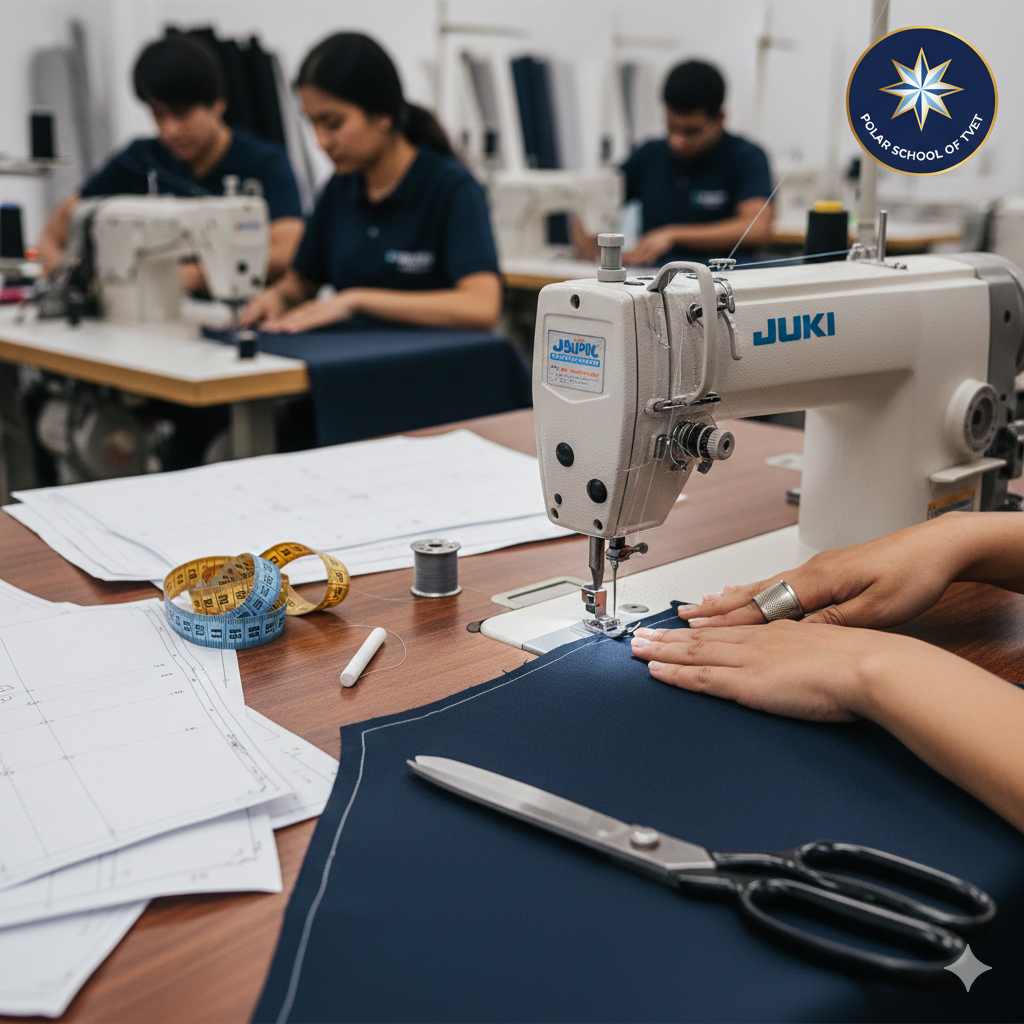
In our department, we define Clothing Construction as the bridge between a two-dimensional concept and a three-dimensional reality. It is the technical heart of fashion design.
While "design" is the what, "construction" is the how. It is the systematic process of assembling a garment using various techniques, tools, and textiles to ensure it fits the human form comfortably and durably.
The Core Pillars of Clothing Construction
In a TVET setting, we break down construction into four critical stages. Understanding these is the difference between a "craft project" and a "professional garment."
1. Preparation and Cutting
Before a single stitch is made, the fabric must be prepared. This involves:
-
Grainline Alignment: Ensuring the fabric hangs correctly by following the warp and weft.
-
Layout: Economical placement of pattern pieces to minimize waste.
-
Marking: Transferring technical data (notches, dart points, button placements) from paper to cloth.
2. Shaping Techniques
The human body isn't flat, but fabric is. Construction is the art of "sculpting" that fabric.
-
Darts and Tucks: Folding fabric to taper around curves like the bust or waist.
-
Ease and Gathers: Managing excess fabric to allow for movement or aesthetic volume.
3. Joinery (Seam Technology)
Seams are the "engineering" of the garment. Different fabrics and stress points require different seams:
-
Structural Seams: Plain seams for general assembly.
-
Decorative/Strong Seams: Flat-felled seams (common in denim) or French seams (common in silk) for a high-end, clean internal finish.
4. Finishing and Closures
A garment is only functional once it can be put on and secured. This involves:
-
Haberdashery: The installation of zippers, buttons, hooks, and eyes.
-
Facings and Linings: Finishing raw edges so they are comfortable against the skin.
-
Hemming: The final step to establish the correct length and weight of the garment's edge.
Why It Matters
In the fashion industry, Construction is Quality. A beautiful sketch means nothing if the garment falls apart at the seams or twists on the body. As your instructor, I emphasize that construction is a science of precision:
"Design attracts the eye, but construction earns the customer's trust."
- Teacher: Admin User